
Extension Today
News from and about the 1890 Land-Grant Extension SystemMessage from the Chair

Dr. Raymon Shange, 1890 Extension Administrator, Tuskegee University
Economic development is about creating opportunities that improve quality of life for individuals, families and communities. As Extension professionals, we play a vital role in helping rural and urban communities build stronger economies through education, innovation, entrepreneurship and partnerships.
Our 1890 Extension system provides residents with the knowledge and resources needed to start businesses, strengthen local industries, improve workforce readiness and address community challenges. These efforts help create pathways to prosperity while ensuring that growth is sustainable and responsive to local needs.
This month, we highlight programs and initiatives that are making a difference, from supporting entrepreneurs and small businesses to advancing workforce development and community resilience. Together, we are helping create a future where both rural and urban areas can thrive.
Building bridges, changing lives

By Terence Norwood
When Juana Macías-Christian left her native Honduras to attend Alabama A&M University on a full scholarship, she did not know what lay ahead. She did not know that the relationships she formed and the opportunities she embraced would lead to a career dedicated to transforming lives across Alabama. Today, more than 24 years after joining the Alabama Cooperative Extension System (Alabama Extension), Macías-Christian continues to serve as a trusted educator, advocate and connector for residents of DeKalb and Marshall counties, particularly within the Hispanic community.
Her journey reflects the very values Extension seeks to promote: education, service and community engagement. After earning her undergraduate degree from AAMU, Macías-Christian returned to Honduras, where she discovered a passion for teaching and community outreach. Seeing how education can improve lives inspired her to keep learning. She later returned to AAMU to earn a master's degree in family and consumer sciences, a decision that ultimately opened the door to a career in Alabama Extension.
As an urban regional Extension agent, she works across community economic development, human nutrition, diet and health, and food safety programming. Yet her work extends far beyond programs and workshops. For more than two decades, she has built relationships that have strengthened trust between Alabama Extension and often limited-resource communities.
"The driving force has always been the people," Macías-Christian explains.
Whether working with students, parents, teachers, business owners, seniors or community partners, she has remained motivated by the opportunity to help others solve problems, achieve goals and improve their quality of life. Her ability to connect with people across cultures and languages has made her an invaluable resource in the communities she serves.
Cultivating opportunities, strengthening communities
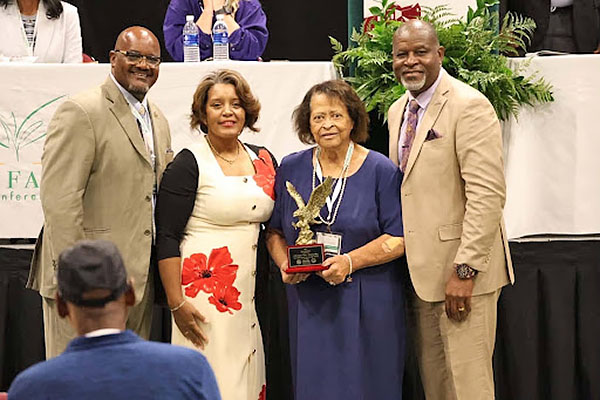
The 35th annual Mississippi Small Farmers Conference brought together farmers, agricultural professionals, entrepreneurs and community partners to explore opportunities to strengthen farm businesses, expand market access and support economic growth across Mississippi.
Hosted by Alcorn State University Extension Program and the Mississippi Association of Cooperatives, the conference provided education, resources and networking opportunities to support the sustainability of small farms and agribusinesses.
Through educational workshops, technical assistance and interactive discussions, participants explored farm business management, financial planning, risk management, marketing and access to capital. These sessions addressed challenges facing small-scale producers while providing practical strategies to improve profitability, strengthen business operations and pursue new economic opportunities.
The conference also featured its inaugural Agroforestry Expo and Women in Business programming, expanding opportunities for participants to explore agricultural diversification, entrepreneurship and alternative income streams.
Connections with agricultural agencies, service providers and industry representatives provided additional pathways to resources that support business development and long-term sustainability.
Beyond agricultural production, the conference emphasized the broader economic contributions of small farms, including local spending, job creation, food systems and business development.
By connecting producers with knowledge, resources and professional networks, ASUEP and MAC continue to strengthen agricultural enterprises and advance economic opportunities that contribute to the vitality of rural and urban communities throughout Mississippi.
Akron Farm grows through Central State’s Growing Equity Partnership
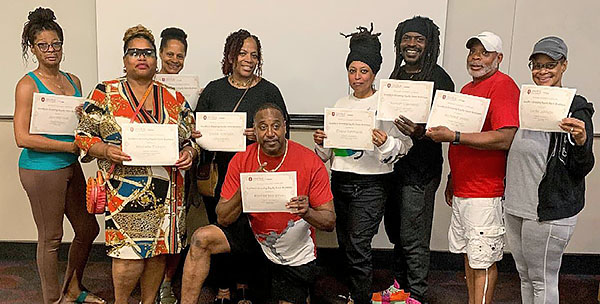
When COVID-19 hit in 2020, Louise Johnson and the board of her Akron, Ohio, nonprofit, Business Training Capital Resource, turned to farming. Their Godrich Food & Farmers Project was created “to combat the COVID health issues and the impact that it was having on training and [farm] workforce,” said Johnson, founder and president.
Needing to learn how to run a farm, Johnson connected with Central State University Extension’s fast-track farming program first and later with Growing Equity Partnership. She was part of the first Northeast Ohio GEP cohort around 2022. An estimated several hundred people across Ohio, including Akron, Columbus, Toledo, Warren, Cincinnati and Dayton, have participated so far.
GEP pairs classroom learning with hands-on experience. “We’ve expanded the Growing Equity curriculum, but the core curriculum, with six classes, focused on agribusiness,” said Stephen Washington, Extension educator for community and economic development in northeast Ohio. Beginner and foundational modules cover startup, marketing, finances and more, and advanced modules are now available. Johnson’s group took the six-week introductory series.
Two classes get the strongest reactions. One compares business structures, such as limited liability companies, nonprofits, corporations and co-ops. The other explains balance sheets and income statements, so entrepreneurs are not lost “when you interact with potential funders and they start hitting you with terminology,” Washington said.
Central State and Godrich Food & Farmers Project are now finalizing a joint-use agreement for a $300,000 homestead and educational center in Akron, part of Johnson’s goal of “a food forest” instead of “a food desert” or youth gun violence in the community.
Growing opportunity, building prosperity
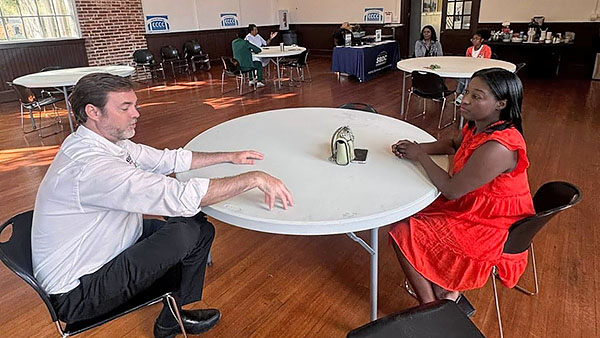
Florida’s rural and urban communities face economic challenges, including unemployment, business closures and stagnant incomes. Florida A&M University (FAMU) Cooperative Extension’s community resource development programming helps residents, entrepreneurs and local leaders address these challenges through practical education, technical assistance and partnerships.
By listening to community needs and connecting participants with expertise, training, mentoring and coaching, FAMU Extension builds local capacity for economic growth. Small business and entrepreneurship programs provide guidance on business planning, social media marketing, forming limited liability companies and pursuing 501(c)(3) tax-exempt status for eligible nonprofit organizations.
Programs also help farmers and entrepreneurs explore value-added enterprises and niche markets, including agritourism and ecotourism. Financial literacy, farm risk management and heirs’ property education help participants make informed decisions and protect their land, assets and livelihoods.
Digital literacy and artificial intelligence workshops equip residents and businesses with skills for employment, communication and business operations. These efforts emphasize digital inclusion and affordable access to broadband, devices and training — resources that connect residents to education, healthcare and jobs while helping businesses reach new markets.
FAMU Cooperative Extension also partners with the Florida Small Business Development Center at FAMU to provide resources and training that help businesses start, grow and thrive. Through Mocha Meetups, a signature SBDC program, Extension helps bring business owners and community partners together for coffee, conversation and connection. Participants exchange ideas, build relationships and hear updates from community leaders.
Through education and collaboration, FAMU Extension expands economic opportunities and helps build stronger, more prosperous rural and urban communities.
Mental wellness workshop focuses on farmers, rural communities
By Russell Boone Jr., Public Information Editor/Writer
Statistics from the Centers for Disease Control and Prevention show that suicide rates for farmers run 3.5% over the national average.
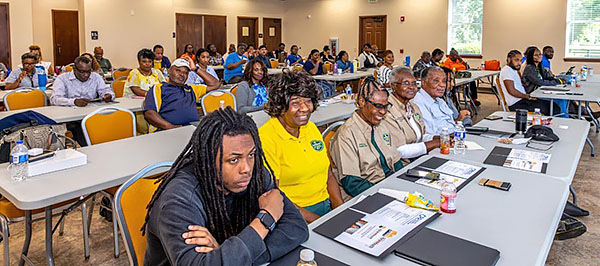
To facilitate open discussion and to inform farmers and rural residents about resources available to the agricultural community, Fort Valley State University’s Cooperative Extension Program, a member of the Georgia Agricultural Wellness Alliance, hosted a workshop called Change, Progress and Restoration: Community Development and Outreach Mental Wellness.
The event recently took place at FVSU’s Agricultural Technology Conference Center. More than 50 farmers, agricultural professionals, Head Start employees and rural residents attended the event.
The GAWA works to support agricultural communities and local partners by creating and identifying resources, training and conversations in support of better mental health on the farm. GAWA is supported through the Georgia Rural Health Innovation Center at Mercer University School of Medicine in Macon, Georgia.
“The purpose of this workshop is to build on the strength of the existing network Fort Valley State University Cooperative Extension has and the communities connected to it. This includes farmers integrated in Fort Valley State’s Extension program, as well as the Head Start programs it supports,” said John McElveen, Ed.D., director of GAWA.
Brendia King, a farmer from Bainbridge, Georgia, was happy to attend a workshop focused on the mental stress of the profession.
“Reach out to Fort Valley State University because not only do they cover what is needed in farming, but they deal with the whole farmer. This includes mental stability, mental health and financial health,” King said.
Kentucky State brings agriculture’s economic possibilities to JA BizTown
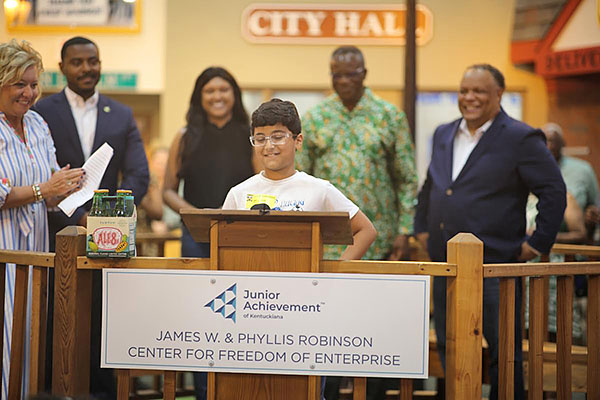
The future of agriculture may begin with a fifth grader deciding whether to approve a farm loan. Another child may discover why a healthy animal matters to the food supply or how a crop grown on a farm reaches a family in the city.
Kentucky State University Cooperative Extension opened the Urban Ag Discovery Center Sept. 18 at Sam Swope JA BizTown. Every fifth grader from Louisville’s Luhr Elementary School took part in the ribbon-cutting debut. The center will welcome more young people through JA BizTown, where 12 classroom lessons lead to a four-hour visit spent operating businesses and managing money.
Developed under the leadership of Lynsey Crumbie, state specialist in agricultural entrepreneurship, the center introduces four roles: chief executive officer/local food systems coordinator, certified public accountant/agricultural lender, farmer and veterinary medical officer. Students examine markets, evaluate loans, compare growing systems and explore animal health.
Crumbie hopes children recognize that “there is a place for them in agriculture,” whether they are drawn to science, business, healthcare or the arts.
Junior Achievement of Kentuckiana partnered with Kentucky State to create the center, with support from Farm Credit Mid-America. More than 14,000 students and volunteers participate in JA BizTown each year, giving the new experience a way to reach young people well beyond its opening group.
For Kentucky State, Kentucky’s only public historically Black university and an 1890 Land-grant University, helping children see the connections among producers, lenders, businesses and consumers is an early investment in rural and urban prosperity.
From vision to action: Strengthening rural communities through strategic planning

Strong rural communities begin with a shared vision and a clear path forward. The Langston University Sherman Lewis School of Agriculture and Applied Sciences Cooperative Extension and Outreach Program is helping rural Oklahoma communities build that foundation through community-driven strategic planning that transforms local priorities into actionable goals.
The initiative strengthens communities’ ability to coordinate development efforts, align priorities with potential resources, prepare funding opportunities and maintain momentum toward long-term economic vitality.
Through its community resource development cluster, Extension professionals work alongside rural communities to connect locally identified priorities with state, federal and other resources that can support infrastructure, economic development, community facilities, recreation, tourism and related community development needs. Through this engagement, they identified that many communities lack current strategic plans to guide decision-making, establish priorities and position projects for future investment.
To address this need, staff developed the Rural Town Strategic Planning Program, an Extension-led initiative that assists rural communities in developing or updating strategic plans that serve as community-driven roadmaps for future growth and development.
Of the 13 rural communities initially identified as needing strategic plans, three communities completed plans during the current year, representing meaningful progress in strengthening local planning capacity. The remaining communities are at various stages of engagement and will continue to receive Extension’s support as they move through the strategic planning process.
The significance of this initiative extends beyond the completion of individual planning documents. The Rural Town Strategic Planning Program is helping communities shift from a project-by-project approach to a more intentional, coordinated and sustainable model of rural development.
Partnership aims to transform vacant land into agricultural opportunities
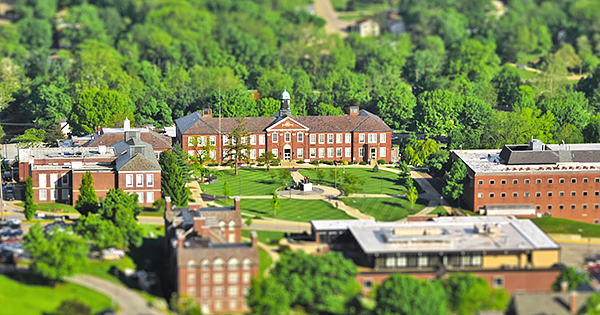
Lincoln University of Missouri has partnered with GRO Health Center to transform vacant properties in north St. Louis into productive agricultural spaces, food businesses and community gathering areas. Through LU’s Innovative Small Farmers Outreach Program, the partnership offers an 11-session educational series that equips residents and aspiring entrepreneurs with the skills and resources needed to establish sustainable agricultural enterprises.
The series, which began this fall, covers soil health, crop selection, agricultural planning, business development and market readiness. LU Extension professionals provide practical guidance to help participants turn their ideas into viable operations that address community needs.
The partnership supports the GRO District, a neighborhood revitalization initiative focused on the historic Hodiamont Tracks corridor and surrounding north St. Louis neighborhoods. Following decades of disinvestment, vacant properties throughout the area present opportunities for agricultural production, economic development and improved access to fresh food.
The collaboration emerged through the efforts of LU’s Mark Lucas, Ph.D., and GRO founder E’Lisa Moss, an LU alumna. By combining the university’s agricultural expertise with GRO’s community-centered approach, the organizations aim to connect education with meaningful action.
Beyond agricultural training, the initiative seeks to create opportunities for business ownership, employment, youth engagement and long-term financial stability. Transforming vacant land into productive spaces can strengthen local economies while encouraging residents to invest in their neighborhoods.
Ultimately, the partnership aims to establish lasting pathways for community development, connecting growers, entrepreneurs and consumers while supporting sustainable agriculture and neighborhood revitalization throughout the St. Louis region.
Powering up: Small-scale farmers learn to lead in Extension program
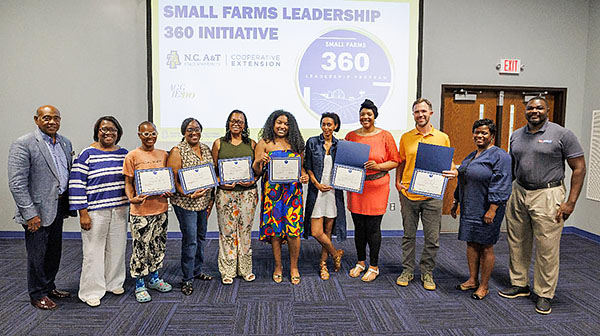
Veronica Godfrey Robinson didn’t think the swampy area of the farm she inherited from her father was of much use financially.
“I didn’t even think about the possibilities of swampland being a part of something I could do as a business,” Robinson said. But her participation in the Small Farms Leadership 360 Initiative, offered by Cooperative Extension at North Carolina A&T, changed her mind.
She learned that the area, roughly five acres of the 15-acre farm, might be used for conservation purposes (which can carry tax advantages) or for the production of mushrooms, or possibly rice.
Robinson is among a dozen people who graduated this year from the initiative. The free program is designed to empower small-scale farmers with the resources, knowledge and support needed to build a successful farm enterprise and become leaders in their communities.
Raymond Thomas, Ph.D., assistant professor and Cooperative Extension agricultural market specialist, took over the program last year. It includes four in-person modules featuring educational sessions on topics such as integrated pest management, product labeling, high tunnel production, budgeting and marketing.
The six-month program is limited to 25 participants per session and partners with the Agriculture Business Innovation Center. ABIC is a national center housed at N.C. Agricultural and Technical State University that offers technical assistance to agricultural business owners to plan, develop and fund ventures.
“I’ve learned that a lot of these small farmers and agricultural initiatives are very, very helpful and eager to help people,” graduate TeCora Galloway said. “This has just been a breath of fresh air.”
Driving rural, urban prosperity through community, economic development

By Talia Washington, Extension Program Specialist III, Community & Economic Development
Economic development involves building environments where people, businesses and communities can thrive and achieve long-term prosperity. Although rural and urban areas face different economic realities, their challenges are increasingly connected.
Keeping the “C” at the forefront of community and economic development is essential because community must come first. According to the Rural Population Research Network, economic development must be people-centered and place-based. The CED Unit at Prairie View A&M Extension invests in entrepreneurship, small business development, workforce training and housing. These areas create pathways in urban and rural communities to help residents and businesses build economic security and prosperity.
The CED Unit does this by having more than 25 agents in and across 30 counties strategically placed throughout the state of Texas who administer programs and workshops on topics such as a nine-week, nine-session government contracting training called the BID Academy, How to Start a Business, Government Contracting 101, Resume Writing, Mock Interviews, Skilled Trades trainings, How to Get Your Business on Google Maps, Financial & Affordable Housing and housing repair programs. Community members can also attain micro-credentials and certifications through Extension’s partnership with Grow with Google and so much more.
In FY2026, the CED Unit helped more than 4,000 entrepreneurs and small business owners with more than 407 workshops. Staff helped owners apply for $3.4 million in business loans and more than $400,000 in small business grants. The BID Academy opened doors to public contracts in which participants submitted 54 contracts worth $25.1 million; $3.43 million in contracts were funded.
Rural entrepreneurs turn business plans into pathways for growth
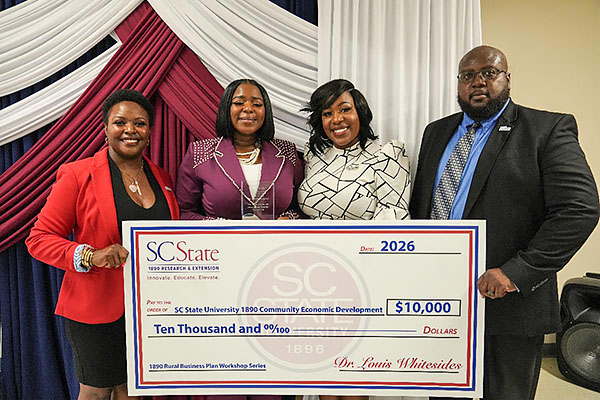
Thirty-two rural entrepreneurs across the Coastal, Pee Dee and Upstate regions participated in South Carolina State Public Service & Agriculture’s spring 2026 Rural Small Business Plan Boot Camp, gaining guidance to develop business plans and prepare pitches for starting or growing their businesses.
Throughout the boot camp, participants worked through their business plans and identified how strategic investments could strengthen workforce development and support business growth. At the conclusion of the series, one business in each participating region received a $10,000 Workforce Development Investment Grant to help put their plans into action.
“The Rural Small Business Plan Boot Camp provided 32 entrepreneurs across the Pee Dee, Coastal and Upstate regions the tools and guidance to develop actionable business plans,” said Dr. Alfred McIntosh, community and economic development program leader. “My goal for every workshop is for participants to leave with something tangible in hand. In this case, they left with a plan they can use to move their businesses forward. The three $10,000 Workforce Development Investment Grants will help our regional awardees begin putting those plans into action.”
Regional awardees included Zeus Prime Solutions LLC in the Coastal Region, M&J Barbershop in the Upstate Region and Surroundance Medical Solutions in the Pee Dee region. Each business received $10,000 to advance its vision, strengthen its capacity by hiring more staff and scale its business to serve its community.
The boot camp reflects SC State PSA’s commitment to driving rural prosperity through entrepreneurship, workforce development and community-centered economic growth.
Driving rural, urban prosperity through GROW LA
By Dr. Krystle J. Allen, Community and Economic Development Specialist at the SU Ag Center
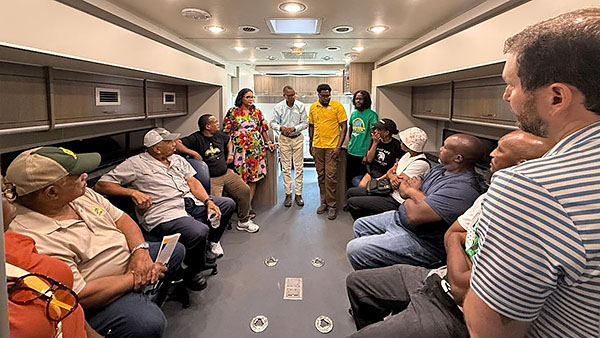
Economic development begins when people have the knowledge, resources and connections to turn possibilities into progress. In community and economic development at the Southern University Ag Center, GROW LA (Growing Rural Opportunities through Workforce and Business Development, Louisiana) is advancing that work with a clear message: “Every Farm is a Business.”
GROW LA is a statewide initiative developed in collaboration with the SU Ag Center’s Agriculture and Natural Resources Department. It connects agricultural education with community and economic development, helping farmers and small business owners strengthen business readiness and access resources that support growth.
Using the Cooperative Extension’s “Boots on the Ground” framework, GROW LA will travel throughout Louisiana, bringing information, expertise and resource partners directly to the people. This approach meets communities where they are and connects participants with opportunities to strengthen their enterprises and local economies.
Our first session in Opelousas, Louisiana, brought participants and resource partners together around agricultural and business development. We are now gearing up for our second location in Ville Platte, Louisiana, with New Orleans, Louisiana, next.
From rural farms to urban businesses, Louisiana’s prosperity depends on connected communities, thriving enterprises and accessible opportunities. Through GROW LA, the SU Ag Center’s Extension Program is putting its statewide reach into action, helping residents build businesses, strengthen livelihoods and contribute to the economic vitality of their communities.
Tennessee 4-H helps youths discover career possibilities
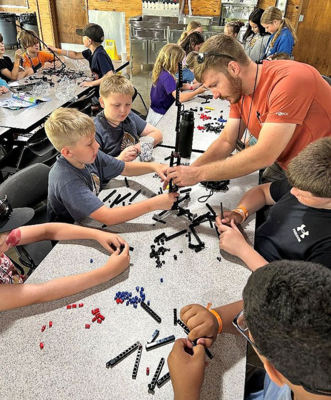
A young person may not know they enjoy working with engines, growing plants or building a robot until they have a chance to try it. Tennessee 4-H gives them those opportunities close to home, where a new experience can become an interest they want to pursue.
Following a successful first year of a grant from Arconic Foundation through National 4-H Council, Tennessee State University and University of Tennessee Extension are continuing hands-on 4-H STEM programming in Blount, Knox, Loudon, Monroe and Sevier counties. School clubs, camps and workshops introduce young people to agricultural science, robotics, engineering, horticulture and emerging technologies.
County Extension agents guide young people through these activities, encouraging them to ask questions, test ideas and work through challenges. Participants learn to explain their decisions, share responsibilities and finish what they start. They also begin to understand how classroom learning applies to work on farms, in businesses and throughout their communities. That connection matters as they consider college, technical training and employment. An activity they enjoyed in 4-H can give them a starting point for exploring a career they had not considered.
Preparing young people for those decisions is part of building strong rural and urban economies. Through practical experiences and support from local educators, Tennessee 4-H helps them discover where their interests could lead and how they can contribute to their communities.
Booker T. Washington Summit addresses rural economic challenges
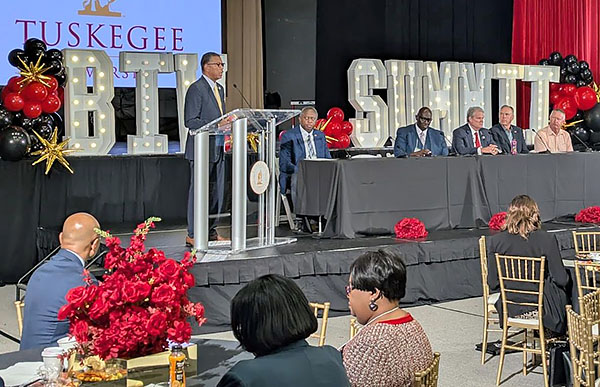
The Tuskegee University Cooperative Extension addresses rural economic challenges through the Annual Booker T. Washington Economic Development Summit. The summit addresses rural economic challenges by bringing together university leaders, public officials, economic development professionals, financial institutions, entrepreneurs and community organizations to discuss strategies for strengthening local economies.
Recent findings suggest that the summit is helping participants build knowledge in areas relevant to rural economic development, including cooperative development, entrepreneurship, the economic impact of historically Black colleges and universities, and local economic development.
The summit hosts sessions addressing issues affecting rural businesses, landowners and workforce development. Some of those sessions include heirs' property, broadband access, Black farmer initiatives, access to capital, financial literacy, business development and entrepreneurship. These topics are particularly relevant to rural communities seeking to retain land, support small businesses, expand economic opportunities and develop a stronger workforce.
The future of agriculture lies in the business side, which will be the focus of the summit's programming. Sessions in agribusiness address small business, entrepreneurship, access to capital, and local economic and community development. These priorities demonstrate continued interest in practical approaches to strengthening local economies.
Overall, the summit is contributing to rural economic development through education, knowledge sharing, institutional partnerships and discussion of community-based economic strategies. Participants' feedback indicated that they gained knowledge, confidence and interest. TUCE will use further summits to determine whether there is a direct increase in rural employment, business revenue, household income, land retention or investment in rural communities. Tracking these outcomes over time would help determine the summit's longer-term economic impact.
UAPB Discovery Farm Educational Centers grow future agricultural leaders
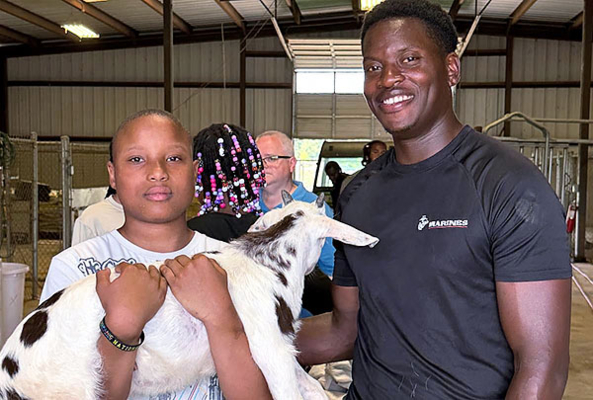
The University of Arkansas at Pine Bluff's Discovery Farm Educational Centers are helping drive economic opportunity across Arkansas by preparing the next generation of agricultural professionals while providing producers with access to research-based conservation practices.
Located on the UAPB campus and at the UAPB Farm in Lonoke, the centers serve as demonstration sites where students, producers and community members can learn about sustainable agriculture, environmental stewardship and innovative agricultural technologies.
Among the centers' accomplishments are edge-of-field demonstration plots that showcase practices designed to improve water quality, soil health and irrigation management. Native grass buffer strips, biochar demonstration plots and a growing livestock education program provide hands-on learning opportunities while demonstrating environmentally responsible and economically viable farming systems.
“The Discovery Farm Educational Centers contribute to economic development by preparing the next generation of agricultural professionals, entrepreneurs and community leaders,” said Dr. Tomekia White, UAPB Extension specialist and outreach director. “Through education, workforce development and hands-on training, we are helping students and producers gain the knowledge and skills needed to support both rural and urban prosperity.”
The centers engage young people through workshops, field days, educational gardens, livestock demonstrations and career exploration activities. Several former participants have gone on to pursue degrees in agriculture-related fields, including animal science, agribusiness and food and nutrition studies. In 2026, UAPB also established a Society of Junior MANRRS chapter for students in grades 7-12, expanding leadership and career development opportunities.
"By investing in youth and connecting them with agriculture early, we are creating pathways to careers that strengthen communities and support Arkansas agriculture for years to come," White said.
Furthering Maryland agritourism through UMES-hosted conference
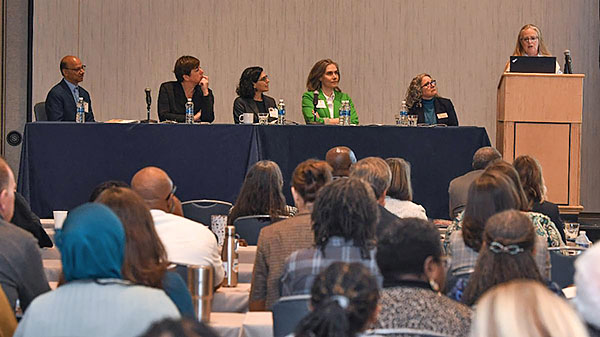
The University of Maryland Eastern Shore Extension will host its second Maryland Agritourism Conference Nov. 15-17, 2026. The conference features speakers and panelists, hands-on workshops, tours to area operations and networking opportunities aimed at advancing agritourism in the state.
This year’s theme is “Boosting Agritourism Strategies to Improve the Profitability of Family Farms.” The goal is to help small- to mid-scale farmers explore industry ideas to start an agritourism business or to incorporate into an existing operation for profit potential.
“The possibilities are nearly endless. Enterprising agritourism operators are expanding their revenue sources by broadening attractions on their farms. This conference offers opportunities to learn directly from these successful operators,” said Prem Bhandari, UMES agritourism and value-added agricultural marketing specialist and conference chair.
Maryland Department of Agriculture Secretary Kevin Atticks will give the opening session keynote address, “The Future of Agritourism and Family Farm Profitability.” His talk is among presentations from topical speakers over the course of the conference at the Hyatt Regency Chesapeake Bay in Cambridge, Maryland.
Among the topics are marketing and branding, AI tools for agribusiness planning, value-added attractions, and cultivating balance between agriculture, agritourism and compatible development. Panel discussions will focus on funding opportunities and other support for agritourism, expanding the regulatory framework for value-added agriculture, and county perspectives for navigating rules and resources.
General admission, which requires advance purchase by Nov. 1, is $250. The pre-conference bus tour is $75. Visit umes.edu/extension/MarylandAgritourismConference.
Driving economic prosperity one producer at a time with VSU’s Ag Biz program
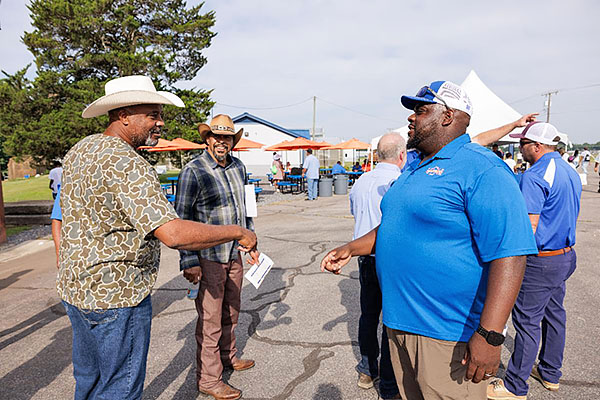
The Small Farm Outreach Program through Virginia Cooperative Extension at Virginia State University is advancing local economic prosperity across the commonwealth where it matters most: at the individual level. By equipping small, limited-resource and veteran farmers with critical agribusiness skills, the Agricultural Production and Financial Management course strengthens farm viability at any stage of their farming journey.
Small and limited-resource farmers face persistent financial challenges, including seasonal cash flow fluctuations, record-keeping hurdles and complex lender requirements. Managing every aspect of a farming operation, even a small one, is no easy feat. This online, self-paced Ag Biz program addresses these barriers through modules on production fundamentals, agribusiness terminology and core financial tools. Participants gain fluency and experience with balance sheets, income statements and cash-flow analyses to make informed operational decisions.
Virtual farm demonstrations provide practical visual examples of successful planning, resource allocation and daily decision-making. By linking production choices directly to financial outcomes, these modules strengthen long-term business potential for rural and urban producers alike.
Beyond skill development, the course offers a critical certification that meets Virginia Farm Service Agency borrower-training requirements. This credential provides producers with expertise and opens doors to agricultural lending and borrower programs.
Through mentorship and direct educational support, the Small Farm Outreach Program helps producers navigate their agricultural journey with confidence. By strengthening producers’ production and financial management skills, VSU Extension continues to drive economic growth for small and innovative farms throughout Virginia.
WVSU feels ripple effect with creative economy initiative
West Virginia State University Extension Service Arts Educator Robby Moore is strengthening West Virginia’s creative economy through the Ripple program, a collaboration between WVSU and the West Virginia Creative Network focused on using creativity to foster growth and resilience.
Through workshops, networking and resource-sharing, Moore, whose position is shared between WVSU Extension Service and WVCN, connects local artists with opportunities. The partnership with WVCN, a nonprofit dedicated to empowering West Virginia’s artists, has expanded Ripple’s impact. Together, they offer support, mentorship and resources to artists at all stages, amplifying creative voices in rural communities.
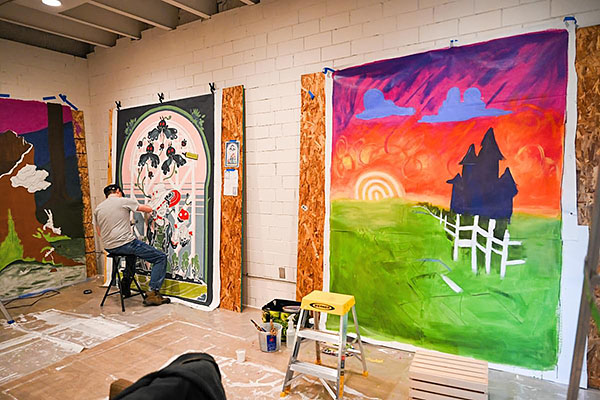
Ripple offers facilitation, coaching and funding for communities to create their own arts-based projects, such as a recent collaborative art park mural project in the state’s capital city of Charleston (pictured). These efforts enrich the cultural landscape, promote cross-sector collaboration and create new opportunities where they’re needed most. In his role, Moore helps ensure Ripple remains responsive to the unique needs of rural West Virginia. The program serves as a model for community-driven progress through the arts.
Through these collaborations, Moore is helping shape a vibrant future for West Virginia’s communities. His work shows how the arts can inspire growth, resilience and unity across the state. Learn more at wvcreativenetwork.org.